Email:export@gzliyin.com
WhatsApp:+8613902386325
Email:export@gzliyin.com
WhatsApp:+8613902386325
In today’s architectural and interior design world, aesthetics alone are no longer enough. Modern spaces are expected to be beautiful, functional, and comfortable—and one often overlooked factor in achieving that balance is acoustic performance. Whether in homes, offices, restaurants, or hospitality venues, poor acoustics can negatively affect the overall experience of a space.
This is why more designers and architects are turning to acoustic panels as a solution that improves both sound quality and visual appeal. Once considered purely functional products, acoustic panels have evolved into stylish design elements that contribute significantly to modern interiors.
In this article, we’ll explore how acoustic panels enhance interior design and why they have become an essential feature in contemporary spaces.
Interior design is not just about what people see—it’s also about what they hear and feel. Sound has a major impact on how comfortable and inviting a space feels.
Hard surfaces like:
can reflect sound and create:
Even the most beautifully designed room can feel uncomfortable if the acoustics are poor. Acoustic panels help solve this issue by absorbing unwanted sound reflections and creating a more balanced acoustic environment.
One of the biggest advantages of modern acoustic panels is that they no longer need to look industrial or unattractive.
Today’s acoustic panels are designed to provide:
This means they can become part of the design itself rather than something hidden away.
Designers can now use acoustic panels to improve room acoustics without sacrificing visual beauty.
Acoustic panels can transform ordinary walls into decorative focal points.
Especially with wood slat acoustic panels, designers can create:
Wood slat panels add dimension and depth to interiors while maintaining a modern and minimalist look.
They are frequently used in:
Acoustic panels can also influence how a room feels spatially.
For example:
This allows designers to manipulate visual perception while also solving acoustic problems.
Modern interior design trends emphasize:
Acoustic panels—especially wood slat styles—perfectly complement these trends.
Their sleek appearance makes them ideal for:
They blend naturally into modern spaces while adding texture and warmth.
Open-plan interiors are increasingly popular, but they often suffer from excessive noise due to fewer dividing walls and more reflective surfaces.
Acoustic panels help:
This is especially important in:
By improving sound comfort, acoustic panels make these spaces more functional and enjoyable.
Many acoustic panel designs, particularly wood slat acoustic panels, incorporate natural wood finishes.
Wood introduces:
This helps soften modern interiors that may otherwise feel too cold or sterile due to heavy use of glass, metal, and stone.
Natural wood acoustic panels help create spaces that feel more inviting and comfortable.
Acoustic panels are highly versatile and can be used in many creative ways, including:
This flexibility allows architects and designers to fully integrate acoustic treatment into the overall design concept.
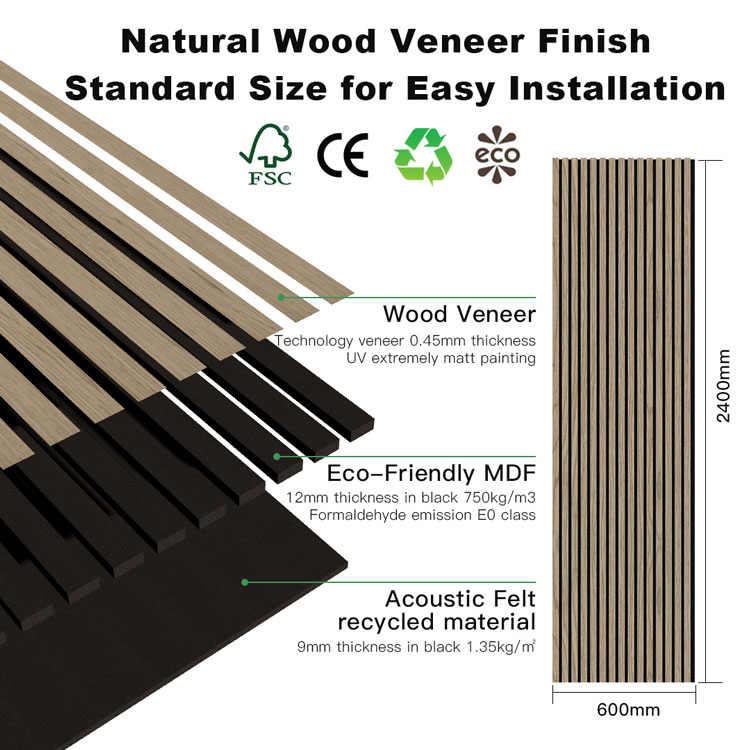
Among all acoustic solutions, wood slat acoustic panels are currently one of the most popular options in modern interiors.
Their layered construction typically includes:
They offer the perfect combination of:
This makes them a preferred choice for projects requiring both style and performance.
At Guangdong Leeyin Acoustics, we specialize in producing high-quality wood slat wall panels and acoustic panels for global markets.
As one of China’s leading exporters of wood slat acoustic panels, we provide reliable, modern acoustic solutions trusted by clients worldwide.
We are committed to delivering products that combine:
Our acoustic panel systems are widely used in residential, commercial, and hospitality projects around the world.
TAGS :

Tel / Whatsapp : +86 13902386325 / +86 13902386325
E-mail
:
export@gzliyin.com


© 2026 Guangdong Liyin Akoestiek Technologie Co., Ltd. Alle rechten voorbehouden.

Hi! Click one of our members below to chat on


