Email:export@gzliyin.com
WhatsApp:+8613902386325
Email:export@gzliyin.com
WhatsApp:+8613902386325
Open ruimtes zijn uitgegroeid tot een van de populairste designtrends in de moderne architectuur. Van open kantoren en coworkingruimtes tot restaurants, hotellobby's en grote woonkamers: open indelingen creëren een strakke, ruimtelijke en moderne uitstraling.
Veel mensen komen er echter al snel achter dat er een groot nadeel is:
Open ruimtes zijn lawaaierig.
Mocht je je afvragen “Kunnen akoestische panelen het geluid in open ruimtes verminderen?”Het antwoord is Ja—maar dat hangt af van het soort geluid en hoe de panelen geïnstalleerd zijn.
In dit artikel leggen we uit hoe akoestische panelen werken in open ruimtes, welk soort geluid ze kunnen dempen en hoe akoestische panelen van houten latten een stillere en comfortabelere omgeving kunnen creëren.
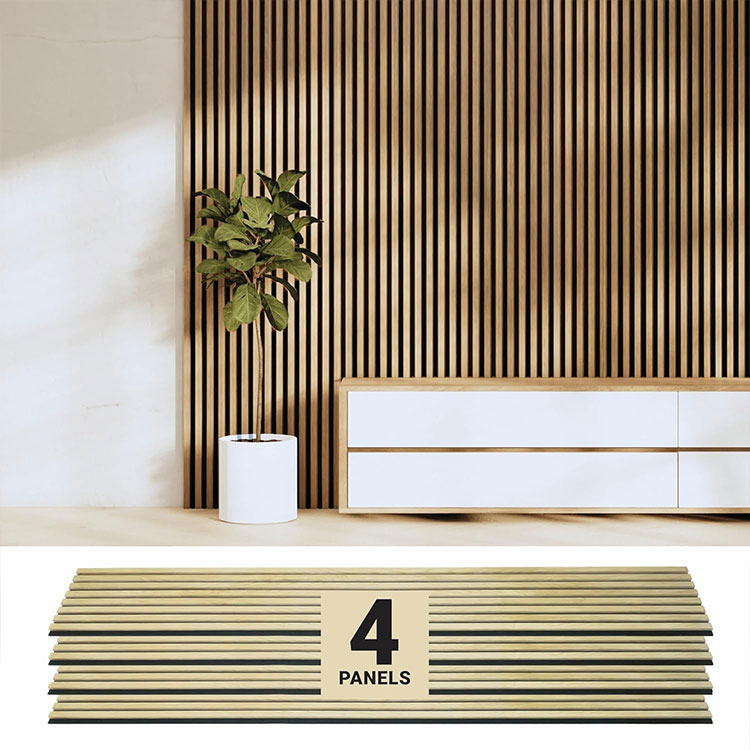
Open plattegronden hebben doorgaans minder muren, minder scheidingswanden en meer harde oppervlakken. Dit creëert de perfecte omgeving voor geluid om zich vrij te verspreiden.
Veelvoorkomende geluidsproblemen in open ruimtes zijn onder andere:
Luide gesprekken galmen door de kamer.
Telefoongesprekken die werknemers in de buurt storen
voetstappen die door grote gebieden echoën
Geluidsoverlast in vergaderruimtes dringt door tot in de werkzones.
een algemeen "achtergrondgezoem" dat nooit verdwijnt
slechte spraakverstaanbaarheid en luistervermoeidheid
Het werkelijke probleem is niet altijd het volume. Vaak is het probleem... geluidsreflectie En nagalm.
Ja-Akoestische panelen verminderen de geluidsperceptie. door geluidsreflecties te beheersen en geluidsenergie te absorberen.
Maar het is belangrijk om één cruciaal verschil te begrijpen:
Akoestische panelen zijn ontworpen voor geluidsabsorptieGeen volledige geluidsblokkering.
Ze helpen bij het verminderen van:
✅ echo
✅ nagalm
✅ Ophoping van spraaklawaai
✅ algemeen geluidsniveau in de ruimte
✅ Afleiding veroorzaakt door weerkaatsend geluid
Ze blokkeren NIET volledig:
❌ Geluid afkomstig van buiten de kamer
❌ Geluid dat door muren, vloeren of plafonds heen reist
In open ruimtes zijn akoestische panelen dus uitermate effectief, omdat het grootste probleem meestal is... weerkaatst geluid, en niet de geluidsoverdracht door muren.
In grote, open ruimtes weerkaatsen geluidsgolven herhaaldelijk tegen muren, plafonds, glas, vloeren en meubels. Hierdoor ontstaat een 'geluidswolk' die zich in de loop van de tijd opbouwt.
Akoestische panelen absorberen deze reflecties, waardoor wordt voorkomen dat geluid steeds weerkaatst.
Resultaat: De kamer voelt stiller en rustiger aan.
De nagalmtijd is de tijd die het geluid nodig heeft om uit te doven nadat de geluidsbron is gestopt.
Open kantoorruimtes en commerciële gebouwen hebben vaak hoge plafonds en harde oppervlakken, wat leidt tot een lange RT60-waarde.
Akoestische panelen verkorten de nagalmtijd, waardoor het "constante geluid"-effect wordt verminderd.
Resultaat: Minder achtergrondgeluid en meer comfort.
Een veelgehoorde klacht bij open kantoorruimtes is:
“Ik hoor mensen praten, maar ik kan me niet concentreren.”
Dat komt doordat galm ervoor zorgt dat spraak zich door de ruimte verspreidt en elkaar overlapt. Wanneer akoestische panelen midden- en hoge frequenties absorberen, worden gesprekken duidelijker en minder chaotisch.
Resultaat: Spraak wordt beter verstaanbaar van dichtbij, terwijl stemmen in de verte minder storend klinken.
In lawaaierige, open kantooromgevingen moet het brein harder werken om ongewenste geluiden te filteren. Na verloop van tijd leidt dit tot vermoeidheid, stress en een lagere productiviteit.
Akoestische behandeling helpt bij het creëren van een rustigere geluidsomgeving, waardoor het gemakkelijker wordt om te werken, te ontspannen of te communiceren.
Akoestische panelen zijn het meest geschikt voor het beheersen van:
Spraak is de grootste bron van geluidsoverlast in open kantoren, restaurants en coworkingruimtes. Akoestische panelen absorberen spraakfrequenties, waardoor de ruimte minder overweldigend aanvoelt.
Grote ruimtes klinken vaak hol en onaangenaam. Panelen verminderen dit galmende of schelle effect.
In drukke omgevingen verminderen panelen de algehele geluidsoverlast, wat het comfort verbetert.
Akoestische panelen zijn niet ontworpen om de volgende problemen op te lossen:
Voetstappen van boven vereisen geluidsisolerende oplossingen zoals ondervloeren, zwevende vloeren of plafondisolatiesystemen.
Panelen helpen reflecties te verminderen, maar kunnen het geluid dat door machines wordt gegenereerd niet volledig elimineren. Hiervoor zijn mogelijk geluidsschermen of speciale behuizingen nodig.
Als u behoefte heeft aan besloten vergaderruimtes, heeft u scheidingswanden, afgesloten muren en geluiddichte deuren nodig.
Akoestische panelen kunnen echter nog steeds de privacy verbeteren door geluidsreflecties te verminderen.
Ja. Open kantoorruimtes zijn een van de meest voorkomende toepassingen voor akoestische panelen, omdat ze de volgende aspecten verbeteren:
productiviteit
comfort van de werknemer
voldoen aan de kwaliteitsnormen
duidelijkheid tijdens telefoongesprekken
tevredenheid op de werkplek
Veel bedrijven investeren in open kantoorontwerpen voor samenwerking, maar zonder akoestische behandeling wordt de ruimte vaak inefficiënt.
Het installeren van akoestische panelen is een van de meest kosteneffectieve verbeteringen voor geluidsbeheersing in open kantoorruimtes.
In open ruimtes zijn plafonds meestal het grootste reflecterende oppervlak. Het installeren van akoestische panelen aan het plafond kan de echo aanzienlijk verminderen.
Plafondbehandeling is vaak de snelste manier om de akoestiek in grote ruimtes te verbeteren.
Wandpanelen zijn effectief wanneer ze op de volgende plaatsen worden geïnstalleerd:
eerste reflectiepunten
grote lege muren
achter zitzones
nabij vergaderlocaties
Voor moderne interieurs, akoestische panelen van houten latten zijn een van de populairste keuzes.
Zij bieden:
hoogwaardige architectonische esthetiek
uitstekende echoreductie
verbeterde spraakverstaanbaarheid
duurzaamheid voor commerciële ruimtes
eenvoudige installatie
Houten lattenpanelen zijn bijzonder geschikt voor:
open kantoorruimtes
coworkingruimtes
hotellobby's
cafés en restaurants
winkelcentra
ontvangstruimtes
Ja. Akoestische panelen van houten lamellen zijn zeer effectief voor geluidsbeheersing in open ruimtes. mits goed ontworpen.
Ze werken via een combinatie van:
houten latten die helpen bij het dempen van geluidsreflecties
Akoestische viltlaag aan de achterkant die geluidsenergie absorbeert.
Optioneel minerale wol of isolatie achter de panelen voor betere prestaties.
Dit maakt ze een uitstekende oplossing voor grote commerciële interieurs die zowel akoestische prestaties als een aantrekkelijk uiterlijk vereisen.
Voor het beste resultaat dienen panelen strategisch geplaatst te worden in plaats van willekeurig.
plafonds boven werkplekken
muren tegenover elkaar (om geluidsweerkaatsing te verminderen)
achter receptiebalies
nabij samenwerkingszones
rond ontmoetingshoeken
boven eettafels in restaurants
in de buurt van gangen en open corridors
Een combinatie van plafond- en wandbehandeling levert doorgaans de beste akoestische verbetering op.
Er is geen vast aantal, maar voor open ruimtes raden veel akoestische ontwerpers aan om de volgende maatregelen te nemen:
20%–40% van de totale oppervlakte (muren + plafond)
In grote, open kantoorruimtes met hoge plafonds en glazen wanden kan een hogere dekking nodig zijn.
Het doel is om de nagalm te verminderen zonder dat de ruimte akoestisch "dood" aanvoelt.
Voor open ruimtes zijn akoestische panelen doorgaans praktischer dan geluidsisolatie.
Verminder echo en geluidsophoping.
Verbeter het comfort en de spraakverstaanbaarheid
kosteneffectief
eenvoudige installatie
moderne ontwerpopties
blokkeert geluidsoverdracht
vereist structurele constructie
duur en tijdrovend
niet altijd mogelijk in bestaande gebouwen
Daarom worden akoestische panelen veelvuldig gebruikt in commerciële buitenruimtes.
Bij Guangdong Leeyin AkoestiekWij zijn gespecialiseerd in de productie van hoogwaardige producten. wandpanelen van houten latten en akoestische panelen voor wereldwijde projecten.
Als een van China's toonaangevende exporteurs van akoestische panelen met houten lamellen, ondersteunen wij importeurs, groothandelaars, interieurinstallateurs en projectontwikkelaars met een stabiele productie en constante kwaliteit.
20.000 m² moderne fabriek
Sterke productiecapaciteit voor grootschalige commerciële bestellingen
Strikte kwaliteitsbeheer op basis van internationale normen.
professionele exportverpakking en logistieke ondersteuning
Aanpasbare afwerkingen, fineerlagen, formaten en kleuren voor de vilten achterkant.
Onze akoestische panelen van houten latten zijn ontworpen om te voldoen aan de eisen van moderne interieurs waar zowel esthetiek als akoestische prestaties belangrijk zijn.
TAGS :

Tel / Whatsapp : +86 13902386325 / +86 13902386325
E-mail
:
export@gzliyin.com


© 2026 Guangdong Liyin Akoestiek Technologie Co., Ltd. Alle rechten voorbehouden.

Hi! Click one of our members below to chat on


